
Python交集
在Python中,计算两个集合的交集可以使用集合对象的intersection()方法,或者使用&操作符,以下是详细的解释和示例:


(图片来源网络,侵删)
使用intersection() 方法
set1 = {1, 2, 3, 4}
set2 = {3, 4, 5, 6}
intersection_set = set1.intersection(set2)
print(intersection_set) # 输出: {3, 4} 使用& 操作符
set1 = {1, 2, 3, 4}
set2 = {3, 4, 5, 6}
intersection_set = set1 & set2
print(intersection_set) # 输出: {3, 4} 比较intersection() 方法和& 操作符
| 方法 | 说明 |
intersection() | 返回两个集合的交集,结果为新的集合对象。 |
& 操作符 | 返回两个集合的交集,结果为新的集合对象。 |
两者在功能上是等价的,可以根据个人偏好选择使用。
示例代码对比
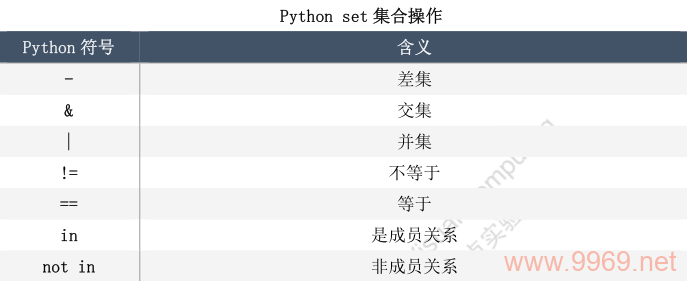
(图片来源网络,侵删)
使用intersection() 方法
set1 = {1, 2, 3, 4}
set2 = {3, 4, 5, 6}
intersection_set = set1.intersection(set2)
print("使用 intersection() 方法的结果:", intersection_set) # 输出: {3, 4} 使用& 操作符
set1 = {1, 2, 3, 4}
set2 = {3, 4, 5, 6}
intersection_set = set1 & set2
print("使用 & 操作符的结果:", intersection_set)  # 输出: {3, 4}
intersection() 方法:适用于需要明确调用方法的场景。
& 操作符:语法简洁,适合快速计算交集的场景。
无论使用哪种方法,都可以方便地计算出两个集合的交集。

(图片来源网络,侵删)
以上内容就是解答有关Python交集_Python的详细内容了,我相信这篇文章可以为您解决一些疑惑,有任何问题欢迎留言反馈,谢谢阅读。
本文来源于互联网,如若侵权,请联系管理员删除,本文链接:https://www.9969.net/74728.html


